BEST DANCE GROUP
CATEGORIES & Competition Code

Categories
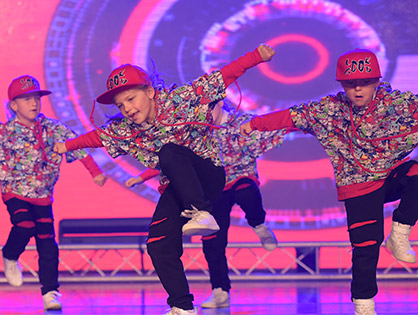
BABY
CATEGORY
BABY
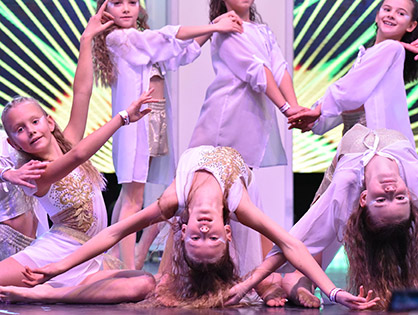
Children
CATEGORY
Children
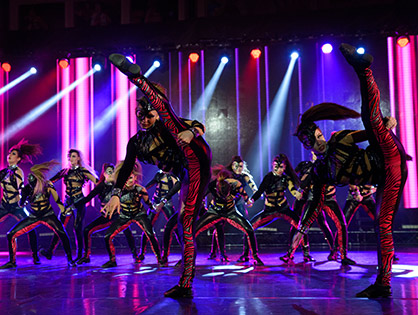
Juniors
CATEGORY
Juniors
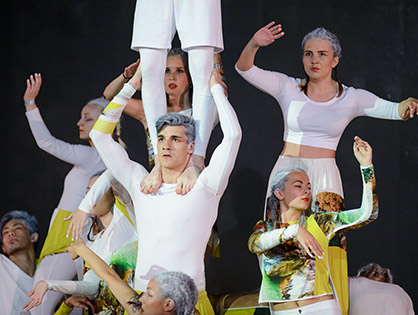
Adults
CATEGORY
Adults
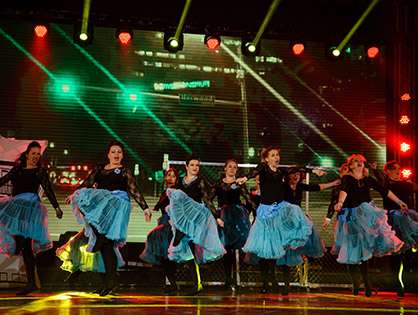
Seniors
CATEGORY
Seniors

SCHOOL EXHIBITION
CATEGORY
SCHOOL EXHIBITION
Competition Code
Age Category
A Baby Category
The dancers who will reach the age of 3 and are up to 8 in the year of competition.
B Children Category
The dancers who will reach the age of 6 and are up to 11 in the year of competition. The dancers exceeding the age limit by 2 years can also be included in the choreography. The condition is that these dancers cannot account for more than 50 % of the dancers in the choreography.
C Junior Category
The dancers who will reach the age of 11 and are up to 15 years in the year of competition. The dancers who are 2 years below or above the age limit can also be included in the choreography. The condition is that these dancers cannot account for more than 50 % of the dancers in the choreography.
D Adult Category
The dancers who will reach the age of 15 in the year of competition; there is no upper limit. The dancers who are 2 years below the age limit can also be included in the formation, but these dancers cannot account for more than 50 % of the dancers in the choreography.
E Senior Category
The age category for parents, choreographers and enthusiastic dancers who will reach at least the age of 25 in the year of competition; there is no upper limit. Younger dancers cannot be included in the formation!!!
COMPETITION RULES
Competition Rule
Participation in competitions
A BDG competitions are open to all members and non-members of all dance organizations as well as to dance groups from EU member states that meet the conditions under the competition code according to regulations for the relevant competition. The contestants can participate in competitions without being affiliated to a club and they are not obliged to be members of a dance club.
Dance groups are categorized into qualification rounds of competing formations according to the regulations of the organizer, unless specified otherwise, and then by place of performance in their country. The only exceptions are the dance groups and individual dancers who, in addition to their original place of performance, also have the same representation in another EU country. These dance groups have the right to choose which qualification competition and in which EU country they will participate in qualification rounds: whether within their place of performance or in the EU country where the dance group was founded and has its headquarters.
Those whose conduct could lead to injury or death, either their own, or other participants', cannot take part in the competition. Regarding the formation competition, each competing dancer may compete in each dance discipline of the relevant age category in an unlimited number of formations.
All dance competitions and disciplines are open (unless otherwise stated in regulations). The contestants shall pay only a one-time membership fee (according to the competition regulations), unless otherwise stated in the competition regulations.
Competition Rule
DANCE FLOOR
B The competition area is at least 12 x 14 metres (unless otherwise stated in regulations for the competition event). A top layer of the dance floor is made of baletizol - black or white.
Competition Rule
PROPS AND BACKDROPS
C The "prop" means an object (i.e. a DANCE TOOL, EQUIPMENT) which a competitor uses during the dance to illustrate the theme, atmosphere or visual effects. A dancer may put the prop down on the dance floor. The prop is an object which is not a permanent part of the costume. If a dancer puts this part of the costume down on the dance floor (a hat, sunglasses, etc. ...) this thing automatically becomes a prop. The "backdrop" means an object (a BUILDING, CANVAS, LIGHT EFFECTS WITH REMOTE POWER SUPPLY FROM ELECTRICITY NETWORK, etc.) which is located on the dance floor and by means of which mood, situation or idea of the choreography is complemented. The props and backdrops which in any way endanger the health or safety of competitors and spectators, or damage or pollute the dance floor, are prohibited. Safe use of props and backdrops is the responsibility of an authorised representative of the group.
Competition Rule
EVALUATION SYSTEM
D SKATING SYSTEM
Competition Rule
EVALUATION BY MEMBERS OF THE JURY
E 1. In the qualification rounds, a juryman must give the required number of "qualifications - crosses (X)" and "partial qualifications - half crosses (/)" for the nomination to the next round (in accordance with the qualifying key specified by the organizer of the competition – according to the number of registered choreographies).
2. In the final, the members of the jury evaluate the best choreography by mark 1, worse by mark 2, etc.
3. In the final, a juryman cannot give the same marks.
Competition Rule
QUALIFYING NOMINATIONS
F The first 5 choreographies from each dance discipline (from each age category) always advance from championships of individual EU member states to the CHAMPIONSHIP BEST DANCE GROUP – EUROPE.
An absolute winner – the BEST DANCE GROUP in the children age category, the BEST DANCE GROUP in the junior age category and the BEST DANCE GROUP in the adult age category will be selected and announced from all the winners in all age categories and all dance disciplines.
The absolute winners of the BEST DANCE GROUP will be selected by a jury consisting of at least 11 professionals – dancers and choreographers.
